How to Safely Clean Oil Spills on Asphalt & Street Surfaces
Learn how to safely clean oil spills and stains from asphalt and street surfaces, plus how to know when it’s time to call a professional power washing crew.
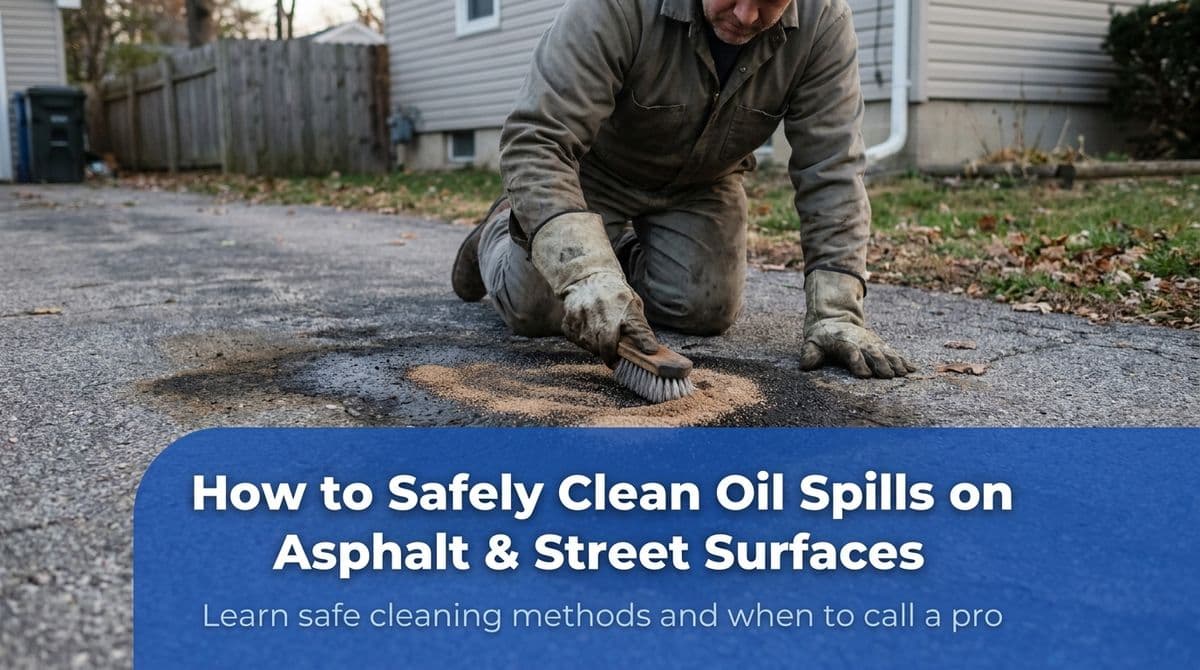
That “Firebird-Sized” Oil Spill in the Street
We recently got a call from a customer — let’s call him Jason — who was dealing with a big oil spill right in front of his house. It wasn’t even on his driveway; it was out in the street, about the size of the car that had been parked there. In his words, “Picture an ’86 Firebird — that’s about how big the stain is.”
The spill had been sitting there for about a week and a half, and Jason was worried it was going to soak in permanently or get him in trouble with the neighbors or HOA. He wanted to know two things: roughly what it would cost, and whether it was something he could handle himself or if he really needed a pro.
His situation is one we see all the time, so I thought I’d walk through how to safely clean oil spills and stains on asphalt and street surfaces — and when it’s time to call in a professional crew like ours.
Why Oil Spills on Asphalt Are Tricky
On the phone with Jason, we explained something a lot of homeowners don’t realize: asphalt itself is petroleum-based. In simple terms, it’s already made with oil. That means you can’t just blast an oil spill with high pressure and harsh chemicals without risking damage.
If you hit fresh asphalt with aggressive pressure washing or the wrong degreaser, you can:
- Strip away the binder that holds the asphalt together
- Loosen rocks and aggregate, leaving a rough, crumbling surface
- Create permanent “clean spots” that stand out from the rest of the street or driveway
- Push oil deeper into the pores instead of lifting it out
So the goal is always controlled cleaning: remove as much oil as possible, protect the asphalt, and keep the mess from spreading down the street or into storm drains.
What You Can Do Right Away for Fresh Oil Spills
If you catch an oil spill early — within a few hours — you can often make a big difference before anyone even calls us. Here’s what we recommend:
1. Contain the Spill
First, stop it from spreading:
- Lay down old towels, rags, or cardboard around the edges
- Avoid hosing it; water just moves oil into gutters and storm drains
- Keep vehicles and foot traffic off the area so you don’t track oil everywhere
2. Soak Up Excess Oil
Next, pull up as much liquid oil as possible:
- Use kitty litter, oil-absorbing granules, sawdust, or even baking soda
- Sprinkle a generous layer over the spill and gently press it down with a broom
- Let it sit at least 30–60 minutes (longer is better), then sweep it up and bag it
For very fresh spills, this alone can remove a large portion of the problem and make professional cleaning faster and cheaper later on.
Cleaning Older Oil Stains on Asphalt or Street Surfaces
By the time Jason called us, his spill had been there about a week and a half. At that point, you’re not just dealing with liquid oil on top of the surface; some of it has already soaked into the asphalt.
Here’s the kind of DIY approach we walk homeowners through for older, smaller stains:
1. Dry Absorbent Treatment (Even If It’s Old)
Even on week-old stains, a round of absorbent is worth doing:
- Apply a fresh layer of kitty litter or oil-dry to the stained area
- Grind it lightly into the surface with your shoe or a broom
- Leave it overnight if you can, then sweep it up and dispose of it properly
2. Gentle Degreaser and Agitation
After the dry cleanup, you can move to a mild cleaner:
- Use an asphalt-safe degreaser or a mild dish detergent mixed with warm water
- Apply to the stain and let it dwell for 5–10 minutes (don’t let it dry out)
- Scrub with a stiff bristle brush (not a wire brush, which can damage the asphalt)
Rinse gently with a low-flow hose, directing water away from storm drains as much as possible. You may need to repeat this process a few times over several days to gradually lighten the stain.
When It’s Time to Call a Professional
With Jason, once we heard “about the size of the car” and “been there a week and a half,” we knew this was on the edge of what a homeowner could reasonably tackle. In cases like that, we typically give a ballpark estimate — in his case, about $225–$300 — and then ask for a photo so we can dial it in.
You should strongly consider calling a pro when:
- The spill is larger than a few square feet (like a full vehicle footprint)
- The stain has been sitting for more than a week
- The surface is in the street, public right-of-way, or HOA area
- You see rain in the forecast that could wash oil into drains
- You’ve tried DIY methods and the stain is still dark and tacky
At that point, our specialized detergents, controlled pressure, and recovery methods can pull out more oil, reduce slipping hazards, and keep contamination out of the storm system.
What to Expect When We Come Out
Homeowners often ask, like Jason did, “What exactly are you going to do out here?” Our process typically looks like this:
- Assessment and protection – We inspect the spill, note the age and size, and protect nearby drains or sensitive areas with booms or barriers.
- Dry removal – If there’s still any “wet” oil or heavy buildup, we use absorbents and scraping to remove as much as possible before adding water.
- Targeted chemical treatment – We apply an asphalt-safe degreaser and let it dwell, using a “little trick” of working in stages so we lift oil out instead of spreading it.
- Controlled agitation and rinsing – Using the right combination of pressure, heat, and brushing, we carefully rinse the area without shredding the asphalt.
- Final cleanup – We collect residue and used absorbents so you’re not left with piles of dirty material in the gutter.
For larger spills like Jason’s, the job usually takes under a couple of hours on site, depending on how deep the oil has soaked in and how hot the weather has been.
How We Estimate Oil Spill Cleanup Costs
On the call, Jason wanted a number he could take back to the family before booking. We usually start with a range — like $225–$300 — then refine it after we see photos or stop by for a quick look.
Our estimates are based on:
- Size of the spill – A spot under an engine is different from a car-length puddle
- Age of the stain – Fresh oil is easier and cheaper to remove than month-old stains
- Surface type – Newer, smooth asphalt behaves differently than older, porous or cracked pavement
- Access and location – Street work may require extra protection for traffic and storm drains
Sending us a quick photo, like we asked Jason to do, helps us give you a more accurate quote and avoid surprises on the day of service.
Common Mistakes Homeowners Make (That We Wish They Wouldn’t)
We’re always happy to help, but there are a few things we see over and over that make cleanup harder:
- Using straight gasoline or solvents – They can soften or dissolve asphalt and create bigger problems than the original spill.
- Blasting with a rental pressure washer – Too much pressure can etch the surface, scatter oil everywhere, and drive it deeper.
- Waiting months – The longer oil sits, especially through hot weather, the more it bonds with the asphalt.
- Hosing it into the gutter – That doesn’t solve the problem; it just moves it downstream and can violate local regulations.
If you’re not sure what to do, a quick call or text with a photo can save you time, money, and a lot of frustration.
Seasonal Considerations for Oil Stain Cleanup
One thing Jason and we talked about was timing. He was looking at a Friday cleanup, which actually worked well with the weather that week. Season and temperature matter more than most people think:
- Hot summer days – Heat makes asphalt softer and oil thinner, so spills can soak in faster but also respond better to the right detergents.
- Cold weather – Oil gets thicker and may sit on top longer, but cleaning solutions can be less effective and take more time to work.
- Rainy periods – There’s more risk of oil getting washed into storm drains before anyone can clean it.
Whenever possible, we like to schedule oil spill cleanups in dry weather with a few hours of daylight left so everything can be properly treated and rinsed before conditions change.
Need Help with an Oil Spill on Asphalt or in the Street?
If you’ve got an oil stain that’s bigger than a dinner plate, has been sitting for more than a few days, or is out in the street where neighbors and HOAs can see it, it might be time to bring in professional exterior cleaning specialists like us.
We’re local, we do this every week, and we know how to balance effective cleaning with protecting your asphalt and your curb appeal. Feel free to reach out, send us a quick photo of the spill, and we’ll walk you through your options — whether that’s a few DIY steps you can try first or scheduling a visit so we can take the whole mess off your plate.